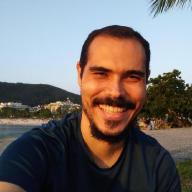
Hello! My name is Francisco Bustamante, also known as chicolucio.
Who writes this
I have a degree in Chemistry and spent more than ten years in the classroom, as a professor and researcher at Fluminense Federal University (UFF) and the Federal Institute of Rio de Janeiro (IFRJ), both in Brazil. It was while teaching that I started using Python to explain science, and Python is what led me to Data Science: I now work as a senior data scientist, focusing on recommendation systems and MLOps (machine learning operations, running models in production).
Ciência Programada brings the two together: the wish to explain, which comes from the teacher, and the habit of solving problems with code, which comes from working with data.
10+
years in the classroom
6+
years with data
110
articles
9
series
The path, in order:
-
Chemistry
2006
Fluminense Federal University (UFF)
Bachelor’s degree and, from 2010, master’s degree in Chemistry, publishing papers in international journals. -
Professor and researcher
2012
UFF
General chemistry and inorganic chemistry, and projects on low-cost teaching resources. -
Laboratory and environment
2014
Rio de Janeiro State Environmental Institute (INEA) and UFF
Environmental analyst at INEA and manager of UFF’s analytical center. -
Professor and researcher
2015
Federal Institute of Rio de Janeiro (IFRJ)
General chemistry, inorganic chemistry and physical chemistry, and a research group on educational software with Python. -
Ciência Programada
2020
this site
Programming, computer science and science with Python, in Portuguese, for thousands of readers a month. -
Data consultant
2022
NECTO Systems, for Uber
Data pipelines for accounting reconciliation. -
Python and data science instructor
2023
Hashtag Treinamentos
Teaching materials, videos and hands-on projects for online courses with thousands of students. -
Data scientist (consulting)
2025
NECTO and TeclaT, for Climatempo and LuizaLabs
Power grid failure prediction with weather data and, currently, recommendation systems.
Where to start
Here I share content on Python programming, computer science, physics, mathematics, chemistry and data science, aiming to make complex topics accessible to students, professionals and anyone curious. Most of it is organized into series, which give the reader an order to follow. Some suggested paths:
- Studying computing? Start with The Language of Sets, move on to From Base Case to Infinity and The Art of Counting, and reach graphs in The Mathematics of Connections.
- Using Python in science or engineering? The SymPy series covers symbolic mathematics, and From Symbol to Number solves numerically what it cannot.
- Want to understand the machine? From Zero to Float shows how numbers are stored, and Inside the Computer opens up the rest, from digital logic to the processor.
All of the site’s series are on the series page. If you prefer, browse by categories or tags.
How the articles are made
- The code runs. Each code block is executed on its own, in a clean Python environment, and the output shown in the article is checked against the real output.
- The facts have sources. Dates, names and historical results are checked against primary sources before publication.
- The formulas are verified. Every formula goes through the same renderer the reader uses before going live.
- The exercises have solutions. They stay collapsed, so you can try first.
Contact
Questions, suggestions and corrections are welcome: write to contato[@]cienciaprogramada.com.br. My full résumé and other projects are on my personal website.